Seals and Sealing Handbook, Fifth Edition

An introduction to the subject of sealing technology, this book provides an understanding of the issues involved and sufficient information to assist with achieving reliable and effective sealing.
 TABLE OF CONTENTS
 Compression packing is often known as packing , gland packing and also soft packing . The concept dates back to the beginning of the industrial revolution. Although it has often been written off as being outdated the progressive development of materials has transformed the performance of the concept and particularly in the area of industrial valves, it is still the most popular method of sealing.
This section describes the general principles of packing to achieve a seal and the application to rotary shafts.
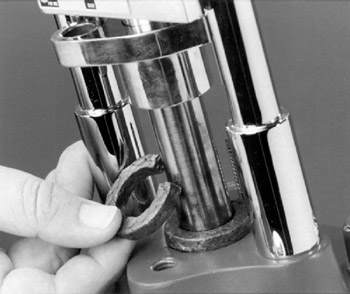
The term compression packing is probably the best description of this form of seal as they are created by using a series of rings of a soft compliant material that is compressed axially from the seal. Most packing is manufactured by braiding a fibrous material into a square cross-section cord that is then cut to length to form the packing. An example is shown in Figure 3.130.
The traditional materials for manufacturing packings were natural fibres, such as cotton, flax and hemp for use at low temperatures with non-aggressive fluids and asbestos for high temperature and to provide chemical resistance. Over the last 30 years asbestos has been replaced and a number of synthetic fibres and materials have been progressively developed. The majority of packings are now manufactured from PTFE, Aramid fibres or graphite. A number of packings that are manufactured from a mix of synthetic fibres to take...