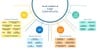
Space Modeling and Simulation: Roles and Applications Throughout the System Life Cycle

Make no little plans, they have no magic to stir man's blood, and probably themselves will not be realized. MAKE BIG PLANS, aim high in hope and work, remembering that a noble logical diagram once recorded will not die.
- Daniel H. Burnham
Industry data show that most critical decisions that affect a program's life-cycle costs occur early in conceptual design, so modeling and simulation (M&S) activities are very important to the program. During this phase, however, requirements are often soft, and unknowns abound; therefore, rigorous M&S techniques may not apply. Time also constrains M&S during conceptual design. Often, customers need quick responses to make high-level decisions about whether a mission will work within a certain cost and schedule. This chapter addresses objectives, focus, basic techniques, and applications for M&S in conceptual design.
The basic goals of conceptual design are to estimate a system's size, mass, power, cost, schedule, and risk under certain constraints on cost, technology readiness, schedule, risk level, and other high-level parameters. Goals define the conceptual design's products, which are similar for many efforts. Objectives define the reasons for a conceptual design, based on the interests of developers, users, and customers. Prime contractors often focus on ways of applying a space or ground segment, whereas the design teams of government and commercial customers typically key on defining requirements, determining...