Supply Chain Management Workbook
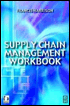
Combining a theoretical underpinning along with a means of self evaluation results, this practical guide provides an overview of the supply chain process and addresses the key aspects involved in a supply chain.
 TABLE OF CONTENTS
 | Understood | Available | |
|---|---|---|
| Shop-floor activities are crucial to the organization's success. |
 |
 |
| People engaged in shop-floor activities represent a majority of working people in our society. |
 |
 |
| People on the shop floor are not only producers of value to society but also customers. |
 |
 |
| The shop floor provides a critical environment for people's career development. |
 |
 |
| Many people spend the majority of their working careers on the shop floor. |
 |
 |
| Developing self-managing capability on the shop floor will help people to chart a course in the current turbulent business environment. |
 |
 |
| Understood | Available | |
|---|---|---|
| Awards: these represent the memory of hard work, or milestones of progress. |
 |
 |
| Banners with important messages or slogans remind people of shared beliefs. |
 |
 |
| Improvement boards describe through pictures and comments changes made. |
 |
 |
| Cross-training charts, skills matrixes, show the skill base of each team member. |
 |
 |
| Charts on attendance and number of suggestions help indicate the health of the organization. |
 |
 |
| Newsletters recognize improvements and ideas and share company objectives. |
 |
 |
| Understood | Available | |
|---|---|---|
| The team is composed mainly of people from the same work area. |
 |
 |
| The focus is on improving problems on the shop floor. |
 |
 |
| The emphasis is on self-management and the use of the team's collective wisdom. |
 |
 |
| Support and guidance may be given by management. |
 |
 |
| The team contributes to the company's mission as well as their own. |
 |
 |
| The team explores everyone's creativity and self-esteem. |
 |
 |
| The team makes use of problem-solving... |