Transmission and Distribution Electrical Engineering, Third Edition
This chapter describes different types of electrical diagrams. It explains how the diagrams are developed from original concepts into drawings which describe the full operation of the system and how further drawings, schedules and diagrams are produced in order to enable the system to be constructed at the factories, installed, tested and commissioned on site. Examples are given of a variety of different styles of presentation based upon manufacturers and National Standards. This chapter concentrates on substation control and protection schemes but the principles apply equally to most electrical plant.
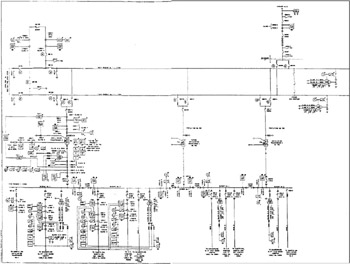
The starting point for new substation work is the block diagram or single line diagram (SLD). A typical example is given in Fig. 2.1. The various elements (current transformers (CTs), metres, control and relay equipment, etc.) are shown symbolically superimposed upon the substation single line diagram. Figure 2.1 uses symbols based upon international practice.
The advantage of this type of diagram is that the complete system can be seen as a whole in semi-pictorial form. Although not meant to be a detailed guide for the layout of the controls and instruments on the control panels, it is sufficiently concise to enable the designer to check that all the facilities required by the operator are present. Similarly for the relay cubicle, the block diagram only illustrates the general requirements for the siting of the relays. A single item on the block diagram could, for example, represent a complex relay scheme which...