UNIX for OpenVMS Users, Third Edition
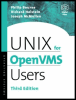
This book makes it easier to see what OpenVMS and UNIX have in common, and to take one s knowledge and experience in OpenVMS over to the brave new world of UNIX.
 TABLE OF CONTENTS
 I was thinking that all these tables [pointing to some logarithms] might be calculated by machinery.
Charles Babbage
You are now ready to begin a terminal session. This chapter explains how to tailor the interactive computing environment to suit your needs and introduces features helpful to the first-time user.
First, we discuss how to set the terminal characteristics to match a host computer environment. This process corresponds to the SET TERMINAL command in OpenVMS. Second, we provide instructions on how to customize the UNIX environment. This process corresponds to customizing the user's LOGIN.COM file in OpenVMS. Next, we discuss the important features of command-line editing and recall, which help you correct incorrect commands. Last, we discuss the UNIX online help system and printed documentation.
At first glance, defining a useful environment for interactive computing using UNIX appears complex. Fortunately, the novice user usually has to do very little (or nothing) to establish a usable environment. The system is distributed with default .profile, .login, .cshrc, and other hidden files, located in the directory /usr/skel in many versions of UNIX. The system administrator may have modified these files to reflect site-specific features. In any case, these files should have been copied to your home directory when your account was established. If these files are present, then you should already have a usable interactive environment.
Customizing the environment to suit individual needs, on the other hand, requires an understanding of the concepts introduced in Sections 3.1...