OVERVIEW
In this chapter, we will define and analyze shareholder value creation. To help us understand this concept better, we will use the example of a listed company, General Electric (GE), between 1991 and 2000.
On December 31, 1991, General Electric had 866.59 million shares outstanding and the price of each share on the stock market was $76.50. On December 31, 2000, General Electric had 9,932 million shares outstanding and the price of each share on the stock market was $47.9375. Consequently, General Electric's equity market value [1] increased from $66.3 billion in December 1991 to $476.1 billion in December 2000. [2] The increase of equity market value during this period was $409.8 billion. However, this is not General Electric's created shareholder value during those years.
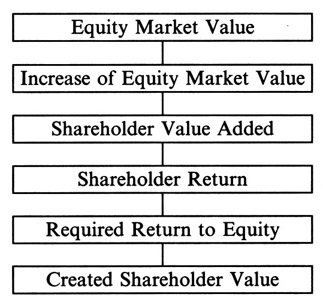
To obtain the created shareholder value, we must first define the increase of equity market value, the shareholder value added, the shareholder return, and the required return to equity. It is important to not confuse the created shareholder value with any of the other concepts we have mentioned. All of these concepts will be explained in this chapter.
Figure 1.1 shows that between December 1991 and December 2000, General Electric's equity market value increased $409.8 billion, the shareholder value added was $452 billion, and the created shareholder value was $279.2 billion.
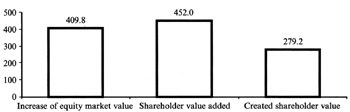 Figure 1.1: General Electric. December 1991 December 2000. Increase of equity market value, shareholder value added, and created shareholder value (billion dollars).

 TABLE OF CONTENTS