Embedded Systems Dictionary
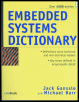
This dictionary defines the meaning and usage of 2,800 of the most-used terms in embedded systems in a way that serves technical and non-technical audiences alike.
 TABLE OF CONTENTS
 n. What happens in a processor in one clock cycle. Traditional CISC processors require two, three, or more clocks to execute an instruction; each of these is a T-state.
RISC machines execute instructions in a single T-state. However, CISC CPUs increasingly offer one-clock instructions as well.
1. n. A straight line that touches a curve at exactly one point. Also called a tangent line.
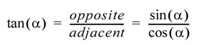
2. n. A trigonometric function that is the ratio of a triangle s two nonhypotenuse sides. Abbreviated tan.
1. n. A material used to make polarized high-capacitance capacitors in a small package.
2. n. Short for tantalum capacitor.
(rhymes with map) abbr. See test access port.
See filter taps.
n. An archive file produced by the Unix tar facility. Such a file usually has a .tar filename extension.
n. The embedded system under development.
USAGE: This term is never used to describe a finished product. During development, the embedded system (for which the software is being developed) is normally called the target to distinguish it from the host system (where the software is being developed). This distinction is necessary, in part, because the host might also be capable of executing the software under development either directly or in a simulator.
See target.
n. The central abstraction of a real-time operating system. Each task must maintain its own copy of the CPU s instruction pointer and general-purpose registers. Unlike processes, tasks share a common memory space and so...