Analytical Mechanics of Space Systems

Chapter 6: Variational Methods in Analytical Dynamics

6.1 Introduction

The evolution of analytical dynamics is closely tied to the mathematical developments known as the calculus of variation. In fact, the principal developers of variational calculus (Euler, Lagrange, Hamilton, Jacobi, Bernoulli, and others) were all actively involved in and motivated by variational problems that arise naturally in analytical mechanics. In this chapter, we begin by developing basic concepts from variational calculus and then turn to the development of the most important results in variational mechanics:

  1. A family of variational principles due to Hamilton that hold for the motion of very general systems, including distributed parameter systems.

  2. Hamilton's principal function , which has several important properties.

  3. Extensions of Lagrange's equations for the case of distributed parameter systems.

6.2 Fundamentals of Variational Calculus

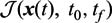
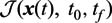
We begin by considering the fundamental problem of variational calculus. We seek to determine a space time trajectory or path that causes a given functional to achieve a local minimum (or maximum). is considered a functional because its argument list contains a vector of unknown functions x( t). Let us consider the special case that is expressible as a path integral:


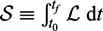
with x( t) =( x 1( t), x 2( t), ..., x n( t)) T.

To obtain the most fundamental classical results, we restrict attention to the case that and x are functions of class C 2 (continuous and twice differentiable with respect to all arguments).

Suppose that

UNLIMITED FREE
ACCESS
TO THE WORLD'S BEST IDEAS

SUBMIT
Already a GlobalSpec user? Log in.

This is embarrasing...

An error occurred while processing the form. Please try again in a few minutes.

Customize Your GlobalSpec Experience

Category: Industrial Valves
Finish!
Privacy Policy

This is embarrasing...

An error occurred while processing the form. Please try again in a few minutes.