Given the versatility of its constituent components, computing engines and networking infrastructure, the scope of NIT systems is vast, extending into many diverse applications and disciplines, limited only by our imagination. Consider, for example an NIT system, shown in Figure 9.1, that integrates the tasks of a new, free-flight, air travel system with global telemedicine. automated precision farming over a wide geographical area, forest management. and natural resource protection. [1]
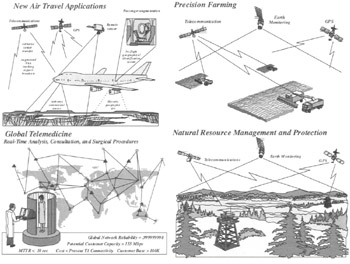 Figure 9.1: Interdisciplinary Nature of Information Technology Systems
 The combination of the versatility, the intrinsic complexity of NIT systems, and the NIT design tools including modeling, simulation, debugging, MFAD mathematical framework, stability analysis, and performance estimation that were presented earlier in the book, implies the following. ADDM algorithm designers must not only possess knowledge of the interdisciplinary fields but also a high quality of interdisciplinary thinking. The rationale behind including the case studies in Chapter 3 was to expose the reader to diverse ADDM algorithm designs from a number of different application domains. The expectation is that the reader will internalize the general and particular concepts, develop an intuitive understanding, and synthesize innovative ADDM algorithms for new problem domains. Thus, while the need for interdisciplinary thinking follows from logic, its practice is far more complex and, to date, has been more of an art. This chapter undertakes a systematic analysis of the creative discoveries and inventions in the history of engineering and science and aims to discover, where possible, a quasi-objective approach to train designers to generate innovative ADDM algorithms...
Copyright Springer-Verlag New York, Inc. 2004 under license agreement with Books24x7

 TABLE OF CONTENTS