High Voltage Engineering and Testing, 2nd Edition
G.R. Jones
The interruption of current in a network cannot meaningfully be considered in isolation from the operating voltage of the system and the nature of the system components and structure. The operating voltage itself affects the type of interrupter chosen for duty whilst the system components and structure (e.g. the extent to which the network is inductive etc.) will influence the detailed design of the interrupter unit because of the voltage transients produced during the current interruption process. It is for these reasons that a discussion of current interruption in electric power systems is appropriate in a book on high voltage technology.
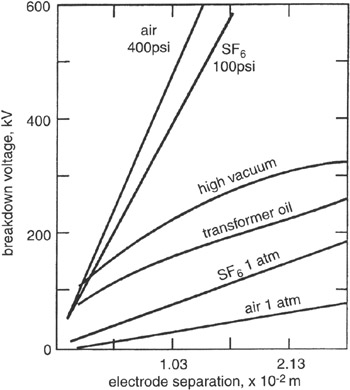
The discussion is mainly about SF 6 interrupters since this medium is the only serious contender for use in circuit-breakers across the entire range of medium, high and extra high voltages. Other contenders - air, oil and vacuum - have an inferior voltage withstand capability (Figure 7.1), although this is not an exclusive consideration with regard to current interruption and there are ranges in which vacuum, in particular, can offer advantages.
The fundamental principles of current interruption as governed by high voltage considerations are therefore described with respect to both system based effects and the characteristics of circuit-breakers. Various types of SF 6 interrupters are considered and different factors which limit their performance are explained. Some possible trends in future developments are indicated.
All methods of interrupting...