ISO 9001:2000 Audit Procedures, Second Edition
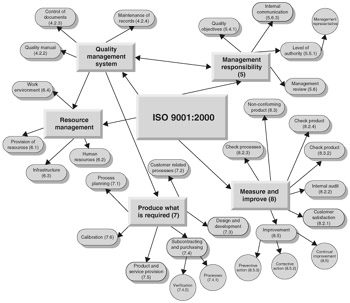
ISO 9001 is the only standard within the 2000 edition to which an organisation can be certified. It includes all the key points from the previous 20 elements of ISO 9001:1994 and integrates them into four major generic business processes, namely:
Management responsibility
(policy, objectives, planning, responsibilities and system review).
Resource management
(human resources, training, facilities and work environment).
Product realisation
(customer focus, design and development, purchasing, production, verification and validation).
Measurement, analysis and improvement
(internal audit, process/product control and continual improvement).
In outline, the structure of the standard is as follows:
| 1 | Scope |
| This clause provides an overview of the standard. | |
| 1.1 | General |
| A description of what the standard covers and explanation of its primary objectives. | |
| 1.2 | Application |
| It is possible that due to the nature of the product that an organisation provides (or manufactures) that some of the sub-clauses within Clause 7 may not be applicable and can be excluded. In all cases, they may be excluded, provided that the reason(s) why they are not entirely applicable to that particular organisation are fully documented in the organisation's Quality Manual. | |
| 2 | Normative reference |
| Details of all the standards that form a mandatory input to ISO 9001:2000 are listed here. | |
| 3 | Terms and definitions |
| This clause confirms the use of the term 'Organisation' (instead of 'Supplier') in ISO 9001:2000. | |
| 4 | Quality Management System |
| Clause 4 of ISO 9001:2000 contains the basic requirements for an organisation to establish,... |