Usability Engineering: Scenario-Based Development of Human-Computer Interaction
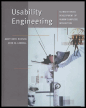
Provides a different and essential perspective of advancing and analyzing the development of interactive systems.
 TABLE OF CONTENTS
 Digital Equipment Corporation's TeamLinks software supports heterogeneous intranets within an organization. The product was originally developed for Windows PC platforms and then ported to the Macintosh platform. Instead of simply porting the Windows interface, the development team engaged in an informal process of customer interviews and iterative prototyping. Through this process, many of the initial assumptions about the product were quickly discarded. For example, users of the Windows version access the TeamLinks application through a special-purpose control window, but the Macintosh version leverages native Macintosh-style document views and navigation. Macintosh users access the application's shared data through the Chooser, using the same techniques they apply to other shared data. Afterward, the developers reported that if they had not taken the time to consider what their Macintosh users would want, they would have wasted the first half of their redevelopment effort (seeWixon, et al.1996).
Usability is not just a nice concept. It determines, whether products and companies succeed or fail. It determines whether some products can be sold at all in international markets. It determines whether people can find the information they need, communicate effectively, and enjoy their work life. It can be a factor in workplace injuries and other safety-related hazards. It determines whether children, the elderly, and others with special needs are able to participate in the larger culture.
In the real world of software development, it is not enough to have creative ideas and all the right skills. The development plan for TeamLinks (see opening vignette) was...