Achieve Lasting Process Improvement: Reach Six Sigma Goals Without the Pain
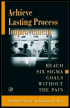
A step-by-step approach to the issue of effective process improvement, offering more than 200 tips and guidelines as well as addressing specific common problems and issues.
 TABLE OF CONTENTS
 A business process is a set of related activities that produces specific end products. One example is a payroll process that produces payments to employees and reports. Another might be research and development that yields improvements over current products or services. The list is endless. Processes are all around you. You exist and participate in various processes at home and work. Processes are encompassing. A business activity or process includes the following:
Business procedures for standard work or transactions.
Exception transactions. These are infrequent transactions.
Workarounds to handle specific problems in processes or where a process has broken down.
Automation provided by the information technology (IT) department or outsourcing firms.
Automation developed internally within departments for their own needs. You have seen many of these. Many departments are highly dependent on them for survival. In fact, they are so important in process improvement, they will be called "shadow systems."
Policies. Policies are rules that govern the business processes and procedures. Policies are very important in this book because sometimes the shortest path to improvement is to modify or amend a specific process.
Employees, consultants, and contractors. Most processes are either manual or partially automated. Even those that are highly automated require employees.
Managers and supervisors. Obviously, work requires supervision and management.
Facilities and other resources. Work does not exist in a vacuum. It must be performed in one or...