Dynamics of Profit-Focused Accounting: Attaining Sustained Value and Bottom-Line Improvement

Most people are familiar with the saying if you can measure it, you can manage it and yet in the previous chapter we learned that you have to manage it, but that measuring it might not be that easy. We also saw where accounting net income and earnings per share do not necessarily add up to value. The recent trend in reporting has been to produce reams of data that confuse and overwhelm even the savviest of financial specialists. If we are to achieve a profit focus with accounting and reporting, we need a starting point and it must align with the organization s strategic value proposition.
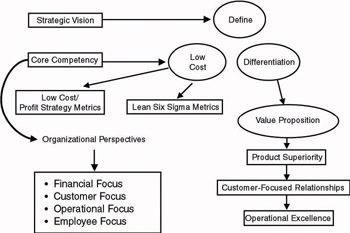
What to measure starts with assessment and a clear sense of where the organization is going. Additional questions follow as to why we are going there and how will we get there. The Theory of Constraints (TOC) and balanced scorecard tools provide companies with the framework for gathering the answers to these questions. From this foundation, each organization can develop its unique profile regarding what needs to be measured. A sample performance measurement profile checklist is presented in Figure 13.1 and will provide a guide to the key issues that should be evaluated in determining what should be measured.
One of the reasons for measuring is to provide a mechanism for knowing if we are on track. Organizations need to determine who needs to know and what they need to know. From this platform we...