Engineering, Business and Professional Ethics
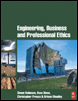
With practical case studies and examples throughout, this book highlights the ethical dimension of engineering while showing how values and responsibility relate to everyday practice.
 TABLE OF CONTENTS
 The skills of ethical reflection are central to the practice of engineering and management. Sometimes these reflections are practised via legislation, such as in the area of Health and Safety, or the process of consultation as a major project is developed. Sometimes ethics simply emerge in the context of a project because of work-based practices that are questionable, because of conflicts that arise out of basic ideas, purpose or values. The case of the Challenger Flight 51-L (referred to as the Challenger, which will be examined in some detail in this book) is a good example. In that, engineers and managers looked at problems from very different perspectives, and the influence of these, far from enabling the contrasting and conflicting values to be explored and worked through, led to disaster.
Sometimes ethical issues may arise out of a clash of cultures. A firm's policy of not accepting gifts may come up against accepted practice in a country where this is seen as normal. Indeed, it may be seen as unethical to refuse a gift. Reflection involves finding the best ways of recognizing and dealing with such issues, and this process might require a closer look at the values of the individual, organizations or culture in question and how such differing values can be appreciated and most creatively accommodated.
Such issues are faced by engineers and managers on a regular basis, and, with the growth and spread of multinational corporations, they are faced with ever more complicated and challenging situations...