Human Factors for Engineers

This volume introduces readers to the subject of human factors and provides practical and pragmatic advice to assist engineers in designing interactive systems that are safer, more secure and easier to use.
 TABLE OF CONTENTS
 This chapter will give guidance on how to assist the performance of system verification and validation (V&V) through the application of human factors (HF) to design during the various phases of a system's life cycle. Notably, a system will be considered as consisting of both humans and machines operating within social, cultural and operating environments. Figure 12.1 depicts this problem space and suggests that HF should be central to the consideration of systems. Therefore, the importance of empathy by the HF practitioner to the activities of the system engineer/maintainer and the user/operator should be emphasised. Moreover, it is argued that true expertise in HF is only acquired through a polymathical approach to work and an understanding of the approaches to the challenges of a system's life cycle by other disciplines such as systems engineering and integrated logistics support.
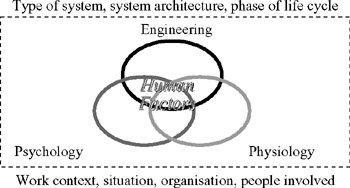
The earlier chapters of this book address many areas related to the application of HF methods to design and of issues related to human and system work. This chapter will attempt to unite the previous considerations of HF into an overall perspective on the application of HF to systems. It will not enter into argument on specifics but rather will try and indicate the generics of good HF practice that support the V&V of HF work.
HF V&V is about checking that the required HF application within a system's life cycle processes are matched by a planned, knowledgeable, and traceable use...