Inorganic and Organometallic Polymers

Polymers are long-chain molecules that are built from simple building blocks, which are known as monomers [ [1] [2] [3] [4] [5]]. Polymers are made from either a single monomer or a combination of two or more monomers.
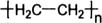
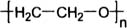
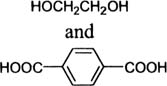
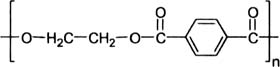
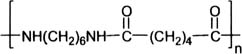
Each polymer has a basic structural unit that repeats itself several times. This is also known as the polymer repeat unit. Table 2.1 gives a few examples of monomers and the polymers derived from them.
| S. No. | Monomer(s) | Polymer repeat Unit | Polymer |
|---|---|---|---|
| 1 | H 2C=CH 2 | | Polyethylene |
| 2 | | | Polystyrene |
| 3 | | | Poly(ethylene oxide) |
| 4 | | | Poly(ethylene terephthalate) |
| 5 | NH 2(CH 2) 6NH 2 and HOOC(CH 2) 4COOH | | Nylon-6,6 |
Many of the polymers are prepared from a single monomer such as ethylene, styrene etc. Other polymers like poly(ethylene terephthalate) or nylon-6,6 are prepared from the reaction of two monomers. There are also polymers which involve the reaction of more than two monomers. Thus, poly(acrylonitrile-butadiene-styrene) is a copolymer and is prepared from polymerizing the monomers acrylonitrile, styrene and butadiene together.
[1]Odian G (2004) Principles of polymerization 4 th Ed. Wiley, New York
[2]Allcock HR, Lampe F, Mark J (2004) Contemporary polymer chemistry 3 rd Ed. Prentice-Hall, Englewood Cliffs
[3]Elias, H.-G (1997) An introduction to polymer science. VCH, Weinham
[4]Braun D, Cherdron H, Ritter H (2001) Polymer synthesis: theory and practice. Springer-Verlag, Berlin, Heidelberg, New York
[5]Stevens MP (1999) Polymer chemistry-an introduction. Oxford...