Managing Risk and Reliability of Process Plants
Chapter 13: Lessons from Incidents

OVERVIEW

When you have studied this chapter, you will understand:

  • some of the typical causes of, and contributory factors to, serious incidents on process plants (including failures of both hardware and software); and

  • some of the early warning signs to be watched out for on operating plants.

This chapter provides practical detail to illustrate the principles set out in Chapters 9, 10, and 11.

(The incidents described in the first four case studies were very influential in leading to development of regulations aimed at improving the safety of installations capable of generating serious off-site impacts.)

13.1 THE VAPOR CLOUD EXPLOSION AT FLIXBOROUGH, UK, 1 JUNE 1974

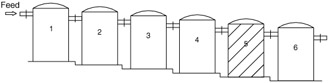
The Nypro site at Flixborough, UK, had a number of plants, producing materials used in the manufacture of nylon. One of the plants, the cyclohexane oxidation unit, had six reactors, arranged as in Figure 13-1. The reactors operated at elevated temperature and pressure. Cracks were found in the fifth reactor, and it was decided to take it out of service for repair. To enable production to be continued during the repair, it was decided to bridge the gap with a pipe. The loss of performance due to using only five reactors was small compared with the loss of all production if the gap were not bridged. (The physical properties and hazards of cyclohexane are similar to those of refined gasoline.)


Figure 13-1: General arrangement of reactors.

Reportedly the workshop foreman sketched out a design for a pipe, and it was installed as shown in...

UNLIMITED FREE
ACCESS
TO THE WORLD'S BEST IDEAS

SUBMIT
Already a GlobalSpec user? Log in.

This is embarrasing...

An error occurred while processing the form. Please try again in a few minutes.

Customize Your GlobalSpec Experience

Category: Process Reactors
Finish!
Privacy Policy

This is embarrasing...

An error occurred while processing the form. Please try again in a few minutes.