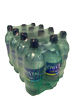
A high proportion of the wide range of polymers manufactured nowadays are used in applications which involve contact with food or beverages particularly in foodstuff packaging applications, utensils, kitchenware and in processing equipment in food factories and other establishments where food is handled in large quantities. In addition to packaging applications, plastics are used extensively in the food and drink vending market and in the manufacture of pre-packed meals, and also in the packaging of pharmaceuticals and cosmetics.
In this Chapter, the types of plastics that are being used in these applications are briefly reviewed. The variants of these polymers such as copolymers and blends are discussed together with a brief general discussion of the properties of the polymers which are most relevant from the point of view of their use in applications involving contact with food.
2.1 Polyolefins and Copolymers
2.1.1 Polyethylene
There are two distinct forms of polyethylene, namely low-density (high pressure synthesis) and high-density (low pressure synthesis, e.g., the Ziegler route). Also available are a range of copolymers of intermediate density made by either blending or by the copolymerisation of ethylene with other olefins such as propene, butane or hexene. The density range for polymers produced by the low pressure route is about 0.945 to 0.965 g/cm 3, whereas the high pressure process produces material with densities between 0.918 and 0.935 g/cm 3. Crystallinities are also different for the two types of polyethylene. The high-density polyethylene (HDPE) with its linear structure favours parallel configuration of...
Copyright Smithers Rapra Technology Limited 2007 under license agreement with Books24x7


 TABLE OF CONTENTS