Applied Analysis: Mathematical Methods In Natural Science
5.3: Potential

5.3 Potential

5.3.1 Harmonic Functions

Function u( x) satisfying ? u = 0 in a domain ? ? R n is said to be harmonic there. It is a fundamental problem in mathematical physics to solve

where ? is a bounded domain and f( ?) is a continuous function on its boundary ??. Actually, we have the following theorem for the Dirichlet problem to harmonic function, (5.47).

Theorem 5.7

Problem (5.47) admits the solution for arbitrary given f ? C( ??) if and only if any point on ?? is regular.

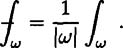
Here, the boundary point ? ? ?? is said to be regular if it has a barrier w( x). This means that w( x) is continuous on , super-harmonic there, positive in , and is equal to zero at x = ?. Furthermore, super-harmonicity of the continuous function w( x) is defined through the mean value property,

It is actually equivalent to ? w ? 0 in ? if w( x) is twice differentiable. Remember that B( x 0, r) denotes the open ball with the center x 0 and the radius r and

If satisfies (5.47), then it is called the classical solution. A sufficient condition for the regularity of boundary point is the outer circumscribing ball condition.

Theorem 5.7 is proven by

UNLIMITED FREE
ACCESS
TO THE WORLD'S BEST IDEAS

SUBMIT
Already a GlobalSpec user? Log in.

This is embarrasing...

An error occurred while processing the form. Please try again in a few minutes.

Customize Your GlobalSpec Experience

Category: Digital-to-Analog Converters
Finish!
Privacy Policy

This is embarrasing...

An error occurred while processing the form. Please try again in a few minutes.