Architectural Engineering Design: Mechanical Systems

An arithmetic progression is a series of numbers whose consecutive difference ? is added to the preceding number, in which the numbers have the form:
| (A01) | |
| (A02) | |
? = sum of arithmetic progression<i class="emphasis">n</i> = number of terms in arithmetic progression<i class="emphasis">a</i> = first number in arithmetic progression<i class="emphasis">z</i> = final number in arithmetic progression<span class="unicode">?</span> = common difference between consecutive numbers. When <span class="unicode">?</span> > 0 theprogression increases; when <span class="unicode">?</span> < 0 the progression decreases.
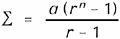
A geometric progression is a series of numbers whose consecutive difference is a ratio r of the preceding number, in which the numbers have the form:
| (A03) | |
| (A04) | |
? = sum of geometric progression<i class="emphasis">a</i> = first number in geometric progression<i class="emphasis">z</i> = final number in geometric progression<i class="emphasis">r</i> = common ratio between consecutive numbers. When <i class="emphasis">r</i> > 1 the progressionincreases; when <i class="emphasis">r</i> < 1 the progression decreases.<i class="emphasis">n</i> = number of terms in geometric progression
| (A05) | |
The square of a polynomial equals the sum of the squares of each term plus twice the products of each pair of terms, as follows:
Thus ![]()
A logarithm is the inverse of an exponential. For example, the equation x = a y can be written as y = log a x, which means y is the logarithm to the base