Biosolids Engineering

Authored by a diplomate of the American Academy of Environmental Engineers, this expert guide offers professional help for designing and managing a biosolids program and decreasing the burden on landfills.
 TABLE OF CONTENTS
 In 1948, the U.S. Congress enacted the original Federal Water Pollution Control Act (FWPCA). Since its passage, the FWPCA has been amended many times. Two of the most important amendments were (1) the 1972 FWPCA Amendments and (2) the 1977 Clean Water Act Amendments [10]. These amendments define the basic national framework for water quality and water pollution control in the United States. Today, the comprehensive federal law is simply referred to as the U.S. Clean Water Act (CWA).
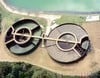
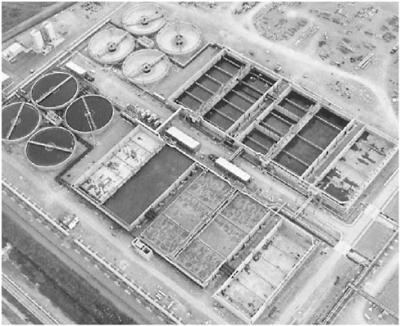
The primary objective of the CWA is to restore and maintain the chemical, physical, and biological integrity of the nation's waters. To prevent contamination and deterioration of water quality, wastewater from industrial, commercial, and residential activities is treated at wastewater treatment plants (WWTPs) before it is discharged to surface water or groundwater (Fig. 1.1).
At present, there are more than 15,000 municipal wastewater treatment plants or publicly owned treatment works (POTWs) in the United States that process over 34 billion gallons of domestic sewage and other wastewater each day [21]. Sewage sludge represents the largest source of residual solids generated during the treatment of municipal wastewater by POTWs as well as by privately and federally owned wastewater treatment works. The annual amount of sewage sludge (i.e., biosolids) generated during the treatment of domestic sewage is estimated at approximately 47 pounds for every individual in the United States. Figure 1.2 illustrates...