Bottom-Line Automation, 2nd Edition

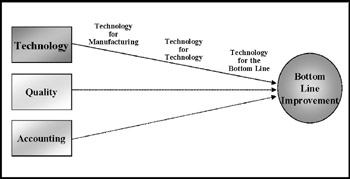
Over the past century process instrumentation and automation technology have evolved through three major phases (see figure 2.1). Each of these phases has had a profound impact on manufacturing. To understand the current move toward bottom-line improvement, we must understand the major issues behind the transition from phase to phase. The first phase is referred to as the "Technology for Manufacturing" phase, and it coincided with the early process manufacturing operations. The second phase, "Technology for Technology," began around 1970 and continues right up to the present in the majority of process plants. The third phase is just starting to take shape and is destined to have a profound impact on the way in which automation is used. This phase is called the "Technology for the Bottom Line" and promises to lead to unprecedented economic performance improvements in the process operations that take advantage of it.
Though digital technology is currently driving manufacturing toward a unified approach to instrumentation and automation, instrumentation and automation in the process industries and discrete manufacturing industries evolved very differently. One of the primary reasons for this divergence is that automation is not a basic requirement for discrete manufacturing. Discrete manufacturing operations involve the assembly of piece parts, which is a very visible operation that can be effectively accomplished by people. Many discrete product assembly lines began as human processes without any automation, and worked quite well. Automation was essentially introduced in discrete manufacturing...