The tools exist here, now, today to forge an entirely new paradigm for managing process plant performance. This paradigm is firmly rooted in the convergence of the historical trends the executives we interviewed identified: technology, quality, and accounting. Further, it can be forged into a dynamic management structure designed to drive performance in process manufacturing and enable the manufacturing operations, along with all other key organizational operations, to be utilized as key components of a company's strategy (figure 5.1).
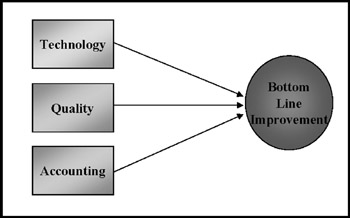 Figure 5.1: The Convergence: Survival in a Global Economy
 Before describing this new management paradigm, it's appropriate to take a few moments to look at the relationship between the dynamic performance measures and the three historical trends we have discussed in this book. Dynamic performance measures provide the next step in the logical progression of each of these three trends and are, therefore, critical to their convergence. It will therefore be helpful to review each of these trends while we examine how dynamic performance measures provide the next logical step in the progression of each.
THE TECHNOLOGY TREND AND DYNAMIC PE RFORMANCE MEASURES
Manufacturing managers have made significant capital expenditures in automation technology over the past thirty years, with little or nothing to show for it. Even with programs such as CIM, millions of dollars were spent with no discernible performance improvement. Many manufacturing managers have indicated that their plants are not running any better today then they were three decades ago, before the existence of computer-based automation...
Copyright ISA—Instrumentation, Systems, and Automation Society 2006 under license agreement with Books24x7

 TABLE OF CONTENTS