1.1 Introduction to the Service Industry
Entities in the service industry are called service organizations. Many service organizations are profit-earning business enterprises, such as restaurants, hotels, and retail stores; some service organizations are nonprofit organizations, such as universities and post services. In any service organization, however, one or more kinds of services are provided to customers. The service industry exhibits some distinct features that are not found in the manufacturing industry. Based on the work of Sasser, Olsen, and Wyckoff (1978), these distinct features include
-
Many services are intangible; they are not things like hardware.
-
Many services are perishable; they cannot be inventoried.
-
Services often produce heterogeneous output.
-
Services often involve simultaneous production and consumption.
However, behind these apparent differences, there are also many similarities between the manufacturing and service industries. Figure 1.1 shows a generic business operation model for manufacturing-oriented companies.
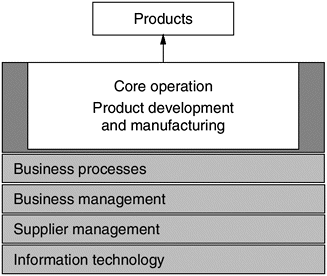 Figure 1.1: Business Operation Model for Manufacturing-Oriented Companies
 A manufacturing-oriented company will provide one or many kinds of products to its customers. In any manufacturing-oriented company, there will always be a core operation, which is usually the product development and manufacturing process. Besides the core operation, there are also many other business processes, such as business management, financial operation, marketing, personnel, and supplier management.
Figure 1.2 illustrates a business operation model for many service organizations. In this model, the service organization has a headquarter and many branches. Each branch is a service delivery process. The service process delivers services to customers. The...

 TABLE OF CONTENTS