Designing High-Speed Interconnect Circuits: Advanced Signal Integrity Methods for Engineers

Chapter 4: Peeling and Mason's Rule

Peeling is one of the truly awesome procedures. It is used by oil companies looking for oil deep in the ground. It has shown up in movies, with famous actors searching for bones of Jurassic-era dinosaurs. And now it is right here in your hands. Peeling is a procedure that generates a physical profile of some embedded object by deconvolving reflections in the time domain. What that means in English, what that means for you, is that you can quickly generate high-quality SPICE models directly from the electrical measurements of connectors and similar devices.

How Peeling Works

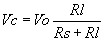
Envision a voltage source with known output resistance ( Rs) that connects to a second resistor ( Rl) to ground. It is easy to calculate the value of the second resistor by measuring the open circuit voltage (Vo) and the connected voltage (Vc) using the voltage-divider equation:


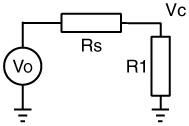
The schematic version of the system is displayed in Figure 4.1. This circuit is one of the most fundamental in electronics, and the sad truth is that if you connect the two resistors with a transmission line, the voltage divider equation only works when a lot of qualifiers surround its application.


Figure 4.1: A Voltage Divider

If the load is a transmission line and the source voltage is a transient, the transient impedance of the line can be measured by the same procedure. However, if the source impedance is a transmission line, this procedure no longer works very well. When something drives...

UNLIMITED FREE
ACCESS
TO THE WORLD'S BEST IDEAS

SUBMIT
Already a GlobalSpec user? Log in.

This is embarrasing...

An error occurred while processing the form. Please try again in a few minutes.

Customize Your GlobalSpec Experience

Category: Voltage Dividers and Voltage References
Finish!
Privacy Policy

This is embarrasing...

An error occurred while processing the form. Please try again in a few minutes.