Environmental Stress Screening: Its Quantification, Optimization, and Management
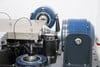
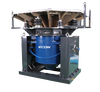
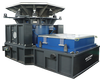
As stated before, random vibration is one of the most effective screening stresses used in ESS. It is considered particularly effective in exposing mechanical defects, such as loose solder, improper bonds, printed circuit board shorts, and others. Among three principal types of vibration, namely, sine wave with fixed frequency, sine wave with swept frequency, and random vibration, random vibration is the most effective. Random vibration involves the excitation of a product with a predetermined profile over a wide frequency range, usually from 20 to 2,000 Hz. Product stress is created through simultaneous excitation of all resonant frequencies within the profile range.
Random vibration is defined as such vibration where either the excitation or the time variation of the system parameters, or both, are random. The random excitation may be classified into three categories: narrow band, wide band, and white noise. Essentially the quantitative analysis of random vibration is a combination of probability theory, stochastic calculus of random processes and applied dynamics. It is assumed that the readers have the knowledge of probability theory and mechanical vibration. Some fundamental concepts and equations associated with a random process, which are useful in random vibration, are briefly reviewed next.