Excavations and Foundations in Soft Soils

4.7: Drained/Undrained Analysis of Excavation

4.7 Drained/Undrained Analysis of Excavation

4.7.1 General

For a vertical and smooth wall with horizontal ground surface, the effective active and passive earth pressures are usually determined using the classical Rankine equation from,

(4.16)
(4.17)

and the undrained active and passive pressures can also be given by

(4.18)
(4.19)

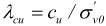
where ? is a factor of anisotropy and it is usually taken as 1 for active case and 2 for passive case, is the normalised undrained strength and it varies between 0.2 and 0.33 for normally consolidated soft clays (see section 2.5.3), H is the excavation depth and z is the depth below the ground surface for the active case and it is the depth below the bottom of excavation for the passive case. Note that the hydrostatic water pressure is not included in Eqs.4.16 to 4.19. They should be calculated separately.

As it is already mentioned in section 3.2.3, it is a well known fact that the behaviour of soils is primarily governed by the effective stresses independent of the drainage condition. Referring to the works of Hvorslev 1937; Rendulic 1937; Brinch-Hansen and Gibson 1949; Schmertmann 1975 and his own experiences on open excavations in soft soils, Janbu 1977 tried to verify the above statement, and he came to the conclusion that the short term undrained behaviour of saturated clays are governed by the effective stresses. The main reason for using the total stress approach for short term undrained conditions in clay is to avoid predicting...

UNLIMITED FREE
ACCESS
TO THE WORLD'S BEST IDEAS

SUBMIT
Already a GlobalSpec user? Log in.

This is embarrasing...

An error occurred while processing the form. Please try again in a few minutes.

Customize Your GlobalSpec Experience

Category: Underground Locating Equipment
Finish!
Privacy Policy

This is embarrasing...

An error occurred while processing the form. Please try again in a few minutes.