Excavations and Foundations in Soft Soils
Shallow foundations are common type of foundations on soft soils. Indeed the magnitude of the settlement and the appropriate settlement prediction plays an important role in order to prevent structural damages to newly erected buildings or existing neighbouring buildings. For that matter, the following well-known damage-producing deformation forms should be studied:
Sagging,
Hogging,
Entrainment settlement,
Tilting.
In general the expected settlements in shallow foundations on soft soils are substantially high and their magnitude are expected to be in the order of decimetres.
Further information on allowable total and differential settlements are given in section 5.4.4.
The shallow foundations on deep soft layers will in particular demand an intensive geotechnical investigations and planning. In the following the special features of the shallow foundations on soft soils are summarised and research results and our experiences from practical projects (case histories) are presented.
Depending upon regional experiences and the formation of the soft soil deposits, historical buildings are founded on different forms of foundation elements. An intensive compilation of historical foundations can be found in Oexle 1986; Gold-scheider 1993.
According to Borrmann 1992 historical foundations can be divided into four different groups. These are:
sleeper foundation,
floating timber pile foundation,
combined sleeper-floating timber pile foundation,
combined timbered floating pile-sleeper foundation
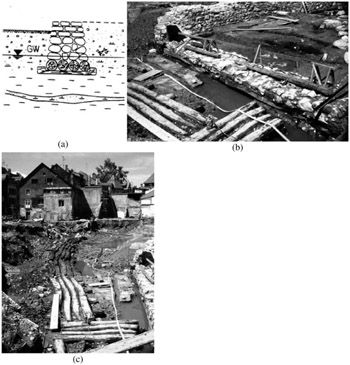
Fig. 5.1 illustrates an example of a sleeper arrangements with horizontal load distributing grids.