Fundamentals of Nonlinear Behavioral Modeling for RF and Microwave Circuits
3.8: FIRST-ORDER MODIFIED VOLTERRA SERIES MODEL (FMVM)

3.8 FIRST-ORDER MODIFIED VOLTERRA SERIES MODEL (FMVM)

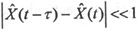
The modified Volterra series can be seen as a conventional Volterra series where the kernels have been parameterized by the instantaneous excitation amplitude. The advantage of (3.11) over (3.10) is that in the case where the system memory duration (time response) T ? is small compared to the excitation signal bandwidth Bw, the series (3.11) converges at the first order, even if the excitation signal amplitude is large and the system is strongly nonlinear. This property results from the fact that the signal cross-products , n ? 2 are negligible within the integrals, since the above condition implies that , ? ? ? [0, T ?]. This is an interesting characteristic as many practical applications tend to fulfill this short-term memory condition (in other terms T ? Bw << 1), especially because herein Bw stands for the modulation signal bandwidth and not the carrier frequency as is the case in real signal modeling. Note that when the system is memoryless, the modified Volterra series converges at the zero-order term, all the other terms are identically zero.

3.8.1 Model Equation

Under the assumption of short-term memory conditions the modified Volterra expansion can be limited at the first order as follows:

(3.12)

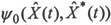
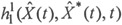
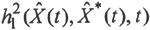
is the system response approximant obtained using the static characteristic of the system. It usually characterizes the fundamental nonlinearity of the system. and are the two first-order "dynamic" kernels accounting for...

UNLIMITED FREE
ACCESS
TO THE WORLD'S BEST IDEAS

SUBMIT
Already a GlobalSpec user? Log in.

This is embarrasing...

An error occurred while processing the form. Please try again in a few minutes.

Customize Your GlobalSpec Experience

Category: Active Band Pass Filters
Finish!
Privacy Policy

This is embarrasing...

An error occurred while processing the form. Please try again in a few minutes.