Handbook of Complex Environmental Remediation Problems
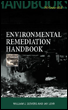
Olin C. Braids
O. C. Braids & Associates, LLC
Soil is the term used to describe the geologic mantle that covers most of the terrestrial earth's surface. Soils vary in development from old, strongly weathered types to young types that have only recently been exposed to weathering as they were deposited from active geological processes such as volcanism or floods and erosional processes. Except where bare stone or water forms the earth's surface, we all live on top of a soil layer. This situation results in soil contributing to beneficial activities of humans, such as growing row and horticultural crops. On the other hand, soil is subjected to deleterious activities such as disposing of waste, spilling of petroleum products and chemicals, discharging of air contaminants that fall to the ground, and subsistence farming that drains the soil of nutrients.
Pedology, the science of soil formation, development, and classification, defines soil as the surficial few inches to feet of the earth's crust that is altered over time in a way that differentiates it from the geologic parent material. The processes acting on specific geologic minerals alter them and develop a vertical profile of textural and color differences that are the bases for soil classification. Such influences as temperature range, native plant populations, precipitation amount and timing, and indigenous fauna produce a vertical soil profile that is characteristic of the influences and their effect on the geologic parent material that develops into the soil profile.
As will be discussed...