Handbook of Electrical Design Details, Second Edition
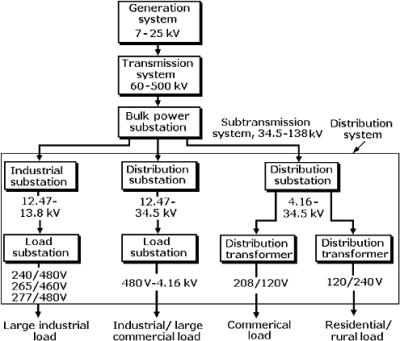
A block diagram of an independent power generation, transmission, and distribution system is shown in Fig. 4-1. Completely self-contained public power systems no longer exist. They are now connected to power grids that cover most of the United States and extend into parts of Canada and Mexico. They permit the interchange of electrical energy from many different power sources. Following electric power deregulation, electrical energy is now becoming more of a commodity that can be bought and sold on the open market. Moreover, the ownership of many power generation plants in North America is now being consolidated in corporations that specialize in that activity.
As a result, most public electric power utilities are predominately power distribution companies. However, public utilities still own their own generation plants, which are capable of meeting routine customer demand when supplemented by purchased power, particularly in periods of heavy demand. Public utilities are free to purchase electrical power when and where it is needed to add to any existing capacity. Local power utilities typically purchase power from bulk sources if it is cheaper than the cost of generating it themselves. Power from the grid can make up for losses in local generation capability during power station maintenance or as a result of disruptions caused by storms, fires, or floods.
In the past, electric utilities invested 30 to 50 percent of their equipment budgets in distribution equipment. With more power generation facilities...