Hertzian Tales: Electronic Products, Aesthetic Experience, and Critical Design

Because the mimetic approach has greatly affected mainstream thinking about electronic objects, most designs for interfaces with electronic products draw on familiar images and clich s rather than stretching design language. Nothing is what it appears, but simply an allusion to something we are already familiar with. Designers using existing codes and conventions to make new products more familiar often unconsciously reproduce aspects of the ideology encoded in their borrowed motifs. The easy communication and transparency striven for by champions of user-friendliness simply make our seduction by machines more comfortable.
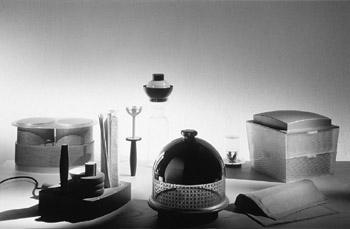
The trend for forms of biomorphic expression, particularly in cameras and other portable devices, can be seen as expressing either an uncritical desire to absorb technologies into the body, a wish to be a cyborg, or, more optimistically, a need to mold technology to the body. But this need for symbiosis does not have to be expressed through the clich d language of bio-form; after all, the symbiosis yearned for is often mental not physical. An engaging, if conservative, image of this desire for symbiosis between people and the environment of electronic artifacts is provided by the series of kitchen tools designed by Marco Susani and Mario Trimarchi for the 1992 Milan Triennale. A mixture of abstract form and familiar materials, they neither pretend to have always been there nor are they completely alien (figure 2.6).