HF Filter Design and Computer Simulation
In a departure from the normal convention of relegating components to the back of the book, we take up the subject early because the realities of components cannot be divorced from the final assembly. The engineer who begins assembly design without consideration of more mundane component issues, and who assumes inductors are inductors or lines are lines, will come to believe that high-frequency design is black magic.
This chapter is not complete. Volumes have been written on these subjects. However, important issues are reviewed in a unified way to form a firm foundation for practical filter development which is studied later.
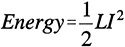
Current flowing in a conductor produces a magnetic flux which encircles the current. When the conductor is arranged such that the flux encircles the conductor more effectively, such as by coiling the conductor, the flux linkage is increased. Inductance, L, is proportional to this flux linkage. Energy is stored in this magnetic flux. The stored energy is
| (1) | |
where I is the conductor current.
A change in current flow causes a change in the flux linkage. This flux change induces a voltage which attempts to resist the change in current. The inductor therefore has current inertia.
From a circuit viewpoint, the ideal inductor terminal impedance is
| (2) | |
The impedance is purely reactive, positive, and increases linearly with frequency.