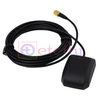
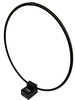
This handbook has threefold objectives, as described in Chapter 1. This glossary aims to provide antenna designers with an catalog of mobile antennas, thereby serving as an information source that assists antenna designer to collate the likely types of antennas suitable for mobile systems and, furthermore, to narrow down the choice of antennas. It should be kept in mind that mobile antennas have shape constraints and many special features that are typically electrically small. In addition, mobile antennas commonly have to operate on small and ill-defined ground planes and may also embody additional system functions, such as multiband operation, diversity, polarization control, and adaptive beam shaping. As far as possible, the catalog of types in Sections A.1 attempts to identify generic forms categorized into linear, planar, material loading, and arrays, but in many cases, it is obvious that a simple classification is likely to be ambiguous and serves no useful purpose. The catalog also includes some mention of related issues such as balun, phase shifter, ground plane, and array technique. Antennas with little or no relevance to mobile systems are excluded, including large parabolic reflectors, large phased array, and large broadcast transmitting antennas. The tables in Sections A.2 to A.5 relate the antenna types to the nature of the mobile terminals, while tables in Section A.6 give a breakdown in terms of applications and frequency bands. Antennas for maritime and aeronautical systems are not treated in this edition. The overlap of information between these sections is international, as are the...
Copyright Artech House, Inc. 2008 under license agreement with Books24x7


 TABLE OF CONTENTS