Modern Sensors Handbook

Chapter written by Stanislav ?A?O and G. HARTUNG.
Measuring the level, position, distance and displacement of physical objects is essential for many applications: process feedback control, performance evaluation, transport, traffic control, robotics, security systems, to name just a few.
The sensors that can operate only when they are in direct contact with measured object belong to the class of contact sensors. By analogy, sensors which perform the measurement task without direct contact with a measured object form the class of non-contact sensors. Obviously the non-contact sensors offer many advantages as ideally they do not interfere with the measured object.
For measurement of time-varying quantities (e.g. vibrations) the dynamic properties of sensors are the key criteria for selection. The dynamic properties of sensors are determined by the frequency response of the sensor (the ratio of the amplitudes of output and input variables with sinusoidal waveform at the different frequencies).
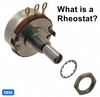
Potentiometers are resistive devices with a linear or rotary sliding contact whose position is affected by the position (movement) of the measured object. The resistance of the resistive material (winding or a layer of resistive material placed on insulated core) between the beginning of the winding and the wiper, is proportional to the position of the wiper. The potentiometer can operate as a variable resistor (rheostat) or resistive voltage divider. The operation in voltage divider (potentiometric) mode in which the voltage between the wiper and one end of the...