Packet Broadband Network Handbook

Providing all of the relevant details on enabling technologies, this easy-to-navigate resource will give you all the context you need to put them in perspective and make well-informed choices.
 TABLE OF CONTENTS
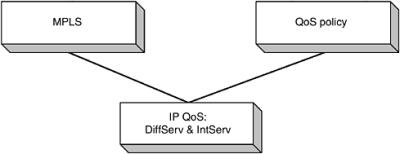
 The IP network of a decade from now probably will no longer be granddad s IP network any more. The best-effort, free-for-all, hop-by-hop routing IP network is being replaced by a QoS-based, more manageable IP. The new IP network infrastructure is starting to take shape as the Internet moves toward becoming a generic, multiservice communications network. This part of the book introduces three key components of the new IP network infrastructure: multiprotocol label switching, IP QoS architecture, and QoS policy provisioning, as shown in Fig. P4-1.
MPLS represents a fundamental extension to the original IP network, with two major changes to the existing infrastructure. First, it adds controllability to IP networks. An IP network is much like a free-for-all highway without traffic control. All the traffic can be crammed onto the highway at once and each router along the way tries its best to get the traffic through without any guarantee of doing so. MPLS marks lanes with labels for the IP highway, and each packet flow has to follow a predefined lane or path. MPLS reduces the randomness and adds controllability to the old IP network. Second, MPLS adds switching capability to routing-based IP networks. Traditional IP networks have every router along the way examine the destination address inside a packet and determine the next hop.