Powder Metallurgy Technology

Giving particular emphasis to those processes which are of industrial significance, this useful text provides detailed coverage of metal powder production, compaction, sintering, hot consolidation, and much more.
 TABLE OF CONTENTS
 It is customary that the powder producer delivers the powder to the fabricator ready for mixing. The aims of annealing are:
to soften the powder
to reduce the residual amount of oxygen, carbon and/or nitrogen from the powder.
The annealing operation may be done in an atmosphere furnace or a vacuum furnace. The former may be of batch or continuous type. The furnace construction is similar to that given in Chapter 6, which deals with sintering technology. Annealing temperatures are kept as low as possible to minimize sintering.
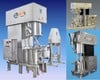
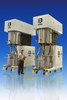
The term 'blending' is strictly applied to a one component operation, whereas mixing involves more than one type of powder, e.g. mixing of solid lubricant with a metal powder or powders of several other metals. Sometimes the additive acts as lubricant as well as alloying addition, e.g. graphite in iron powder.
Various variables in the powder mixing process have been highlighted by Hausner.1 They are:
Type of mixer
Volume of the mixer
Geometry of the mixer
Inner surface area of the mixer
Constructional material and surface finish of the mixer
Volume of the powder in the mixer before mixing
Volume of the powder in the mixer after mixing
Volume ratio of component powders
Volume ratio of mixer to powder
Characteristics of component powders
Type, location and number of loading and emptying devices
Rotational speed of mixer
Mixing time
Mixing temperature
Mixing medium (gaseous or liquid)
Humidity, when mixing in air.
Mixing efficiency is best when the powder...