Powder Metallurgy Technology
Giving particular emphasis to those processes which are of industrial significance, this useful text provides detailed coverage of metal powder production, compaction, sintering, hot consolidation, and much more.
 TABLE OF CONTENTS
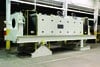
 A conventional sintering furnace can be divided into three distinct zones. They are (Fig. 6.15):
Burn-off and entrance zone
High temperature sintering zone
Cooling zone.
The zone of the furnace is designated to heat the green compacts rather slowly to a moderate temperature in the order of 450 C. The main function of this burn-off zone is the volatilizing and elimination of the admixed lubricant. A slow heating rate is necessary to avoid excessive pressures within the compact and possible expansion and fracture. The length of this zone must be sufficient to allow complete elimination of the lubricant before the compacts enter the high temperature zone. The metal (for example zinc from zinc stearate) and the carbon after the breakdown of the hydrocarbons resulting from the volatilizing of the lubricant can deposit on the furnace heating element and promote premature failure. Such deposits on refractory walls and cooling zones lead to poor heat transfer. On the other hand the compacts may be subjected to discoloration and possible undesirable chemical reactions.
The flow of the atmosphere is important in expelling the lubricant vapours. For this, sufficient atmosphere gas must be provided, and the flow directed so the vapours are discharged toward the furnace entrance and not into the high heat zone. The burn-off zone is sometimes separated with an air gap, using a flame curtain before the high heat zone.
During vacuum sintering metallic stearates are not used and instead stearic acid or a...