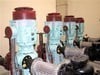
Steam generation, whether it be for power production or industrial process use, is a complex process. A steam generating plant is filled with pumps, piping, valves, electrical wiring, instruments, and of course, one or more boilers. All must work together to generate the desired product, steam, which may range from saturated conditions at less than 100 psig to supercritical steam at 1050 F
The primary water systems in a steam plant include:
The contrasting nature between differing systems requires water of varying quality, and also requires different treatment methods. For instance, in a well-sealed, closed cooling water system, a simple corrosion inhibitor may be the only chemical needed to protect system components. In a boiler, where water temperatures can reach 600 F or higher and steam temperatures 1050 F, highly purified feedwater, dosed with carefully controlled treatment chemicals, is required if the boiler is to operate properly. Table 1-1 illustrates some of the effects that contaminants have on boiler water systems.
Table 1-1: Common Steam Generating System Contaminants | Compound | Effect on Plant Equipment and Operation |
| Oxygen | Oxygen is often the principal corrodent in water systems. It causes pitting and failures of pipes and heat exchangers. Oxygen corrosion in boiler systems generates particulates that travel to the boiler where they precipitate and cause further problems. |
| Calcium | Calcium can combine with a number of anions to form deposits and scales. In cool ing water systems the most common deposits include calcium... |
Copyright PennWell Publishing Company 1997 under license agreement with Books24x7

 TABLE OF CONTENTS