Printed Circuit Assembly Design

There are a number of widely used industry standards that describe methods, guidelines, and basic procedures for identifying, documenting, and controlling printed circuit assembly (PCA) design revisions. These can be used to establish and manage cost-effective configuration change control processes that are applicable to all documentation associated with the design, procurement, manufacturing, assembly, and testing of PCAs. The key to structuring cost-effective controls for change implementation is understanding how different types of changes act on associated PCA documentation. Figure 3.16 shows a typical set of PCA design documents and common relationships and linkages.
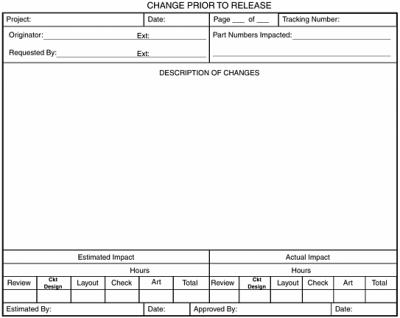
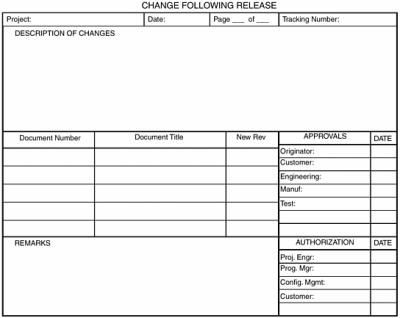
Two simple forms can be created and used to control, identify, and track all PCA design and documentation revisions. There are two because one is intended to focus on changes that occur during the design process, whereas the other defines changes to be incorporated into documentation and data that have been released and placed under formal control. These forms should include the following types of information:
Change identification (tracking number)
Product identification (part number, description, and program)
Origination date
Originator (name)
Change description (clear, concise, and legible should show was/now or from/to )
Estimate (impact to project cost and schedule)
Comments (ideas and suggestions for change implementation) Approval (name and date)
Figures 7.1 and 7.2 are examples of these two types of forms.