Reliability Engineering Handbook, Volume 1

The exponential distribution is a very commonly used distribution in reliability engineering, because it represents both phenomenologically and empirically the time-to-failure distribution of components, equipments, and systems of complex nature with components of different and/or mixed life distributions, exhibiting a constant failure rate characteristic with operating time. Failures which result in a constant failure rate characteristic are called chance failures. Consequently, the time-to-failure distribution of chance failures is the exponential.
The single-parameter exponential pdf is
| (5.1) | |
where
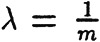
| ? | = | constant failure rate, in failures per unit of measurement period, e.g., failures per hour, per million hours, per million cycles, per million miles, per million actuations, per million rounds, etc., |
|
|
| m | = | mean time between failures, or to a failure, |
| e | ? | 2.718281828, |
and
| T | = | operating time, life, or age, in hours, cycles, miles, actuations, rounds, etc.. |
This distribution requires the knowledge of only one parameter, which is ?, for its application.
Figure 5.1 illustrates Eq. (5.1). Some of the specific characteristics of the single-parameter exponential pdf are the following:
The location parameter is zero, signifying that the chance failures start to occur at age zero.
The scale parameter is 1/ ?. As ? is decreased in value, the distribution is stretched out to the right, and as ? is increased, the distribution is pushed toward the origin.
This distribution has no shape parameter as it has only one shape, i.e., the exponential, and...