Smart Antenna Engineering

2.5: Basic CDMA Procedures

2.5 Basic CDMA Procedures

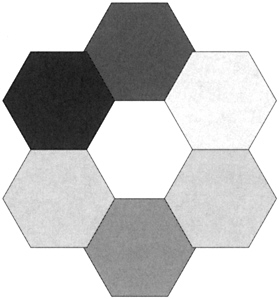
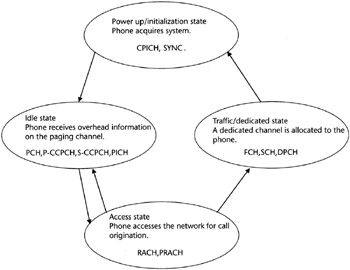
As previously described, each CDMA base station transmits a different PN sequence (gold code). In WCDMA, there are 512 primary scrambling codes available. Each scrambling code has low cross-correlation with any other scrambling code regardless of the timing offset between the two scrambling codes. This allows the base stations to be deployed asynchronously. In CDMA2000, base stations transmit the same PN sequence (M-sequence) offset by different amounts of time. There are 512 PN offsets available. An M-sequence transmitted with a given PN offset has low autocorrelation with any other PN offset. To guarantee that each base station transmits a PN offset that is distinct from those in its vicinity, base stations need to be synchronized so that they have a common sense of timing. Figure 2.20 shows a typical CDMA cell layout where the color of each cell indicates a different PN offset. This approach is necessary so users could identify the different base stations or sectors and to enable a CDMA phone to acquire the system. This acquisition process is one of several possible states for a mobile phone or UE, Other states shown in Figure 2.21 include idle, access, and dedicated.


Figure 2.20: CDMA cell layout.

Figure 2.21: CDMA call states.

2.5.1 Acquisition State

Acquisition means acquiring the system. It is done upon power up or loss of service. For example, in WCDMA acquisition consists of a three-step process designed to simplify the 512 x 38,400 search space, where there are 512...

UNLIMITED FREE
ACCESS
TO THE WORLD'S BEST IDEAS

SUBMIT
Already a GlobalSpec user? Log in.

This is embarrasing...

An error occurred while processing the form. Please try again in a few minutes.

Customize Your GlobalSpec Experience

Category: Wireless Communications Services
Finish!
Privacy Policy

This is embarrasing...

An error occurred while processing the form. Please try again in a few minutes.