Telecom Basics, Second Edition
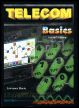
This guide presents the groundwork of telecom technolgies, network, systems, and call processing.
 TABLE OF CONTENTS
 Switching is the process of connecting two (or more) points together within a network or communication devices. These connections can be physically connected (mechanical switch) or connected logically (through software). The first telephone systems performed the switching of calls by human operators. The operators interconnected telephone lines by manually connecting cables at switchboards.
Switching systems have evolved from manual switchboard systems (wires and plugs) to logical (digital) switches. The earlier types of manual switchboard systems were changed to automatic switching systems to eliminate the need for operators to setup every call. The first types of automatic switching systems used crossbar switches. Crossbar switches used mechanical arms to physically connect to wires (or busses) together. This has progressed to time slot interchange (TSI) switches. TSI switches logically interconnect communication lines through the temporary storage of data in memory time slots.
Circuit switching is a process of connecting two points in a communications network where the path (switching points) through the network remains fixed during the operation of a communications circuit. While a circuit switched connection is in operation, the capacity of the circuit remains constant regardless of the amount of content (e.g. voice or data signal) that is transferred during the circuit connection.
Figure 5.1 shows how circuit switching is used for voice communication. In this example, a telephone is dialing a telephone that is connected to a distant switch. When the user dials the telephone, the dialed digits are captured and used to program the circuit switches between...