Telecommunications Cabling Installation, Second Edition
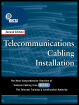
For anyone needing clear cable installation guidelines, parameters, codes, terms, and acronyms, this clear, complete guide provides a solid, reliable cable installation training manual.
 TABLE OF CONTENTS
 Because telecommunications cabling installers work with other disciplines, such as data processing and the building industry, they must follow numerous rules in everyday business. These rules are contained in codes, standards, and regulations.
Code A rule intended to ensure safety during the installation, use, and/or disposal of materials, components, fixtures, systems, and related subjects. Codes are typically invoked and enforced through government regulation.
Standard A collection of requirements that encompass the properties of components and systems. Standards establish an accepted degree of functionality, interoperability, and longevity.
Regulation Usually issued by government agencies and is considered to be a mandatory rule. A typical government agency that issues regulations is the Federal Communications Commission (FCC). Regulations are becoming less numerous because governmental agencies are moving away from the regulation of telecommunications. The Telecommunications Act of 1996 removed most of the competitive regulations involving telecommunications; however, many state and some FCC rules still apply to telecommunications service providers (SPs) and interexchange carriers (IXCs).
Construction in virtually all countries is regulated by building codes, standards, and regulations. In North America, codes and standards are normally enforced by an authority having jurisdiction (AHJ) and encompass most, if not all, aspects of the construction industry. Installation methods, materials, and electrical products must conform to the requirements of the AHJ. Regulations are issued by governmental agencies, usually on state or federal government levels. Codes and standards contain two important words, shall and should, which can have a major impact on how tasks...