Digital Video and HDTV Algorithms and Interfaces

This chapter details the scanning, timing, sync structure, and picture structure of 480 i29.97 (525/59.94/2:1) video. The scanning and timing information in this chapter applies to all variants of 480 i video, both analog and digital. The sync information relates to component analog, composite analog, and composite digital systems.
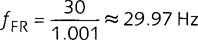
480 i video represents stationary or moving two-dimensional images sampled temporally at a constant rate of 30/1.001 frames per second. For studio video, the tolerance on frame rate is normally 10 ppm. In practice the tolerance applies to a master clock at a high frequency, but for purposes of computation and standards writing, it is convenient to reference the tolerance to the frame rate.
| Note | |
A frame comprises a total of 525 horizontal raster lines of equal duration, uniformly scanned top to bottom and left to right. Scanning has 2:1 interlace to form a first field and a second field; scan lines in the second field are displaced vertically by half the vertical sampling pitch, and delayed temporally by half the frame time, from scanning lines in the first field. In MPEG-2 terms, the first field is the bottom field.
| Note | It is confusing to refer to fields... |