Validation of Chromatography Data Systems: Meeting Business and Regulatory Requirements
The final stage in the life cycle of a CDS is the retirement of the components of the system.
There is again nothing formal or implied in the GLP or GMP regulations about what is needed when retiring or decommissioning a chromatography data system or indeed any computerised system used in a controlled environment.
Often system retirement is a euphemism for either throwing the components out of the organisation or donating the items to an educational institution. There needs to be a more structured process where the components have documented evidence of their removal from operational service.
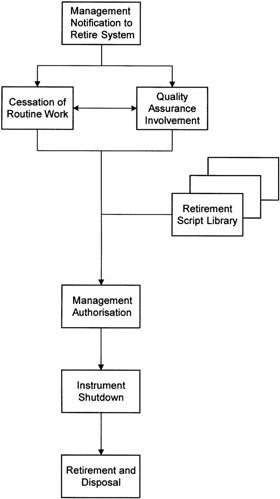
The overall process flow for system retirement is shown in Figure 45, the involvement of both management and quality assurance in the process is a critical success factor.
There needs to be a formal notification that the old CDS will be retired. This is important as there needs to be continuity and co-ordination between the old system being retired and the new CDS being installed, qualified and becoming operational. There can be no gaps in service support as chromatography in most laboratories is a major analytical technique. Therefore, there needs to be an orderly transition between the two systems and work that is ongoing is smoothly transferred to the new CDS.
Continuity of laboratory operations is important as there is typically never a good time to transfer between systems.