Wireless Telecommunications Networking with ANSI-41, Second Edition
ANSI-41 wireless networks interoperate with each other to provide nationwide roaming services to wireless subscribers. They also interoperate with wire line networks to support calls between wireless and wire-line parties. These calls can be traditional voice calls or data calls that can convey circuit-switched or packet-switched data. ANSI-41 network interoperation involves the interconnection of trunks and signaling links between the networks as well as business agreements between the service providers. This chapter describes the interconnection of ANSI-41 networks with other wireless and wire-line networks.
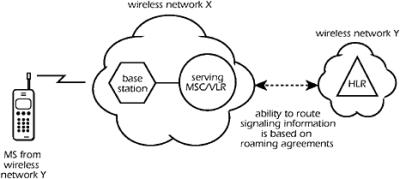
A roaming agreement is a legal and business contract entered into by two wireless network service providers. This contract defines the methods by which one wireless network provides service to subscribers from the other wireless network. It also defines the tariffs and the methods for billing roaming subscribers. Roaming agreements are also the basis for proper routing of signaling information between the two networks. Based on these agreements, provisionable tables in the network equipment are populated with information that enables subscribers to register and receive services from a visited system (see Figure 17.1).
Roaming agreements...