Overview
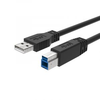
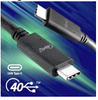
The Universal Serial Bus (USB) is one of the most common interfaces used in electronic consumer products today, including PCs, cameras, GPS devices, MP3 players, modems, printers, and scanners, to name a few.
The USB was originally developed by Compaq, Microsoft, Intel, and NEC, and later by Hewlett-Packard, Lucent, and Philips as well. These companies eventually formed the nonprofit corporation USB Implementers Forum Inc. to organize the development and publication of USB specifications.
This chapter describes the basic principles of the USB bus and shows how to use USB-based applications with PIC microcontrollers. The USB bus is a complex protocol. A complete discussion of its design and use is beyond the scope of this chapter. Only the basic principles, enough to be able to use the USB bus, are outlined here. On the other hand, the functions offered by the mikroC language that simplify the design of USB-based microcontroller projects are described in some detail.
The USB is a high-speed serial interface that can also provide power to devices connected to it. A USB bus supports up to 127 devices (limited by the 7-bit address field note that address 0 is not used as it has a special purpose) connected through a four-wire serial cable of up to three or even five meters in length. Many USB devices can be connected to the same bus with hubs, which can have 4, 8, or even 16 ports. A device can be plugged into a hub which is plugged into another hub,...

 TABLE OF CONTENTS