
MOD-N Binary Counter Counter and Timer Boards
Last Updated: April 1, 2025
Description
MOD-N Binary Counter and Timer Boards are specialized electronic devices designed to count and measure time intervals. These boards are capable of counting a specific number of states, defined by the modulus N, which is determined by the number of bits in the counter. They can operate in both count-up and count-down modes, making them versatile tools for various counting and timing applications.
Working Principle
MOD-N Binary Counters work by advancing their count with each clock pulse received. The counter can be designed to count up to a maximum number of states, which is determined by the number of bits (n) it contains, allowing it to count up to (2^n) states. These counters can be either synchronous, where all flip-flops are triggered simultaneously, or asynchronous, where each flip-flop is triggered by the previous one. Synchronous counters offer faster operation due to simultaneous triggering, while asynchronous counters are simpler and require less hardware.
Applications
MOD-N Binary Counter and Timer Boards are used in a variety of applications, including digital clocks, frequency counters, and event counters. They are also employed in industrial automation systems for process control and monitoring, where precise counting and timing are crucial. For example, they can be used in manufacturing lines to count the number of items produced or in telecommunications to measure time intervals between signals.
Advantages over other Counter and Timer Boards
MOD-N Binary Counters offer the advantage of being able to count a specific number of states, which can be tailored to the needs of the application. This flexibility makes them suitable for applications requiring precise counting and timing. Additionally, synchronous MOD-N counters provide faster operation compared to asynchronous counters, which can be beneficial in high-speed applications.
Limitations
One limitation of MOD-N Binary Counters is their dependency on the number of bits, which restricts the maximum count they can achieve. Asynchronous counters, while simpler, are slower due to their serial clock structure, which can be a drawback in applications requiring high-speed counting.
Considerations
When selecting MOD-N Binary Counter and Timer Boards, it is important to consider factors such as initial costs, operating expenses, and the specific requirements of the application. Synchronous counters, while faster, may require more complex and costly hardware. Durability and accuracy are also critical factors, especially in industrial applications where reliability is paramount. Maintenance and replacement costs should be evaluated to ensure long-term cost-effectiveness.
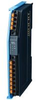
from Advantech
1-ch SSI Encoder Module. Counter Mode: - SSI singnal with Binary or Gray code. Latch Counter Value. Comparator *2. Compare trigger Output *2 [See More]
- Counter Type: MOD-N